



more information....
Soil redox potential refers to the oxidation-reduction status of the soil, which is closely linked to the availability of oxygen for plant roots and soil microorganisms (Husson 2013. While the underlying chemistry of redox processes is complex, redox potential can generally be understood as a continuum from high (oxidizing conditions with ample oxygen) to low (reducing conditions with limited or no oxygen). Low redox conditions typically occur in waterlogged or anaerobic soils.
Redox potential plays a critical role in both agricultural and horticultural systems, influencing nutrient availability, microbial activity, and overall soil health. Additionally, soil redox dynamics are fundamental in shaping natural ecosystems, often delineating boundaries between different vegetation communities such as wetlands, grasslands, and forests (Snakin et al., 2001).
measuring redox – what do the values mean?
Scientists measure soil redox potential using the Eh scale (measured in millivolts):
- High Eh values (+400 to +700 mV): Well-oxygenated, oxidized conditions
- Low Eh values (-300 to +200 mV): Oxygen-depleted, reduced conditions
Kaurichev and Shishova (1967) defined four classes of soil redox conditions:
- I: Eh > +400 mV -> aerated soils.
- II: Eh +100 to +400 mV -> moderately unaerated (reduced) soils.
- III: Eh -100 to +100 mV -> strongly unaerated (reduced) soils.
- IV: Eh -300 to -100 mV -> anaerobic, or highly reduced, soils.
For agricultural soils, Eh values between 400 and 500 mV are highly favourable conditions (Husson 2013).
how to measure soil redox
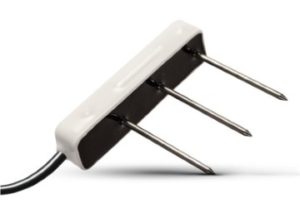
To measure Eh, Edaphic Scientific offers Australian and New Zealand scientists advanced soil redox probes from the world-leading manufacturer, SWAP Instruments. These probes provide real-time, continuous monitoring of redox conditions, allowing researchers to observe dynamic changes in the soil environment. The probes can be integrated with data loggers and accessed remotely via cloud-based platforms, facilitating efficient data management and analysis. Alternatively, portable, handheld meters are available for quick and easy spot measurements of soil redox.
The SWAP Instruments redox probes have an integrated reference probe for easy and efficient installations. The equipment is also suitable for installation in many settings, including pots in a glasshouse, soil columns in a laboratory, or field conditions such as wetlands, peat, forests, woodland, agriculture, and horticulture.
soil redox – an animation
soil redox and soil chemistry
The redox environment of soil determines the chemical form and solubility of many nutrients. For example, nitrogen’s availability to plants is heavily dependent on redox conditions. In oxidized soils (Eh > +500 mV), nitrogen is predominantly present as nitrate (NO₃⁻), a mobile and plant-available form. In contrast, under reducing conditions (Eh < +400 mV), ammonium (NH₄⁺) becomes dominant. Similarly, the redox state affects phosphorus availability indirectly through its interaction with iron and aluminum oxides that adsorb phosphate ions. Manganese, iron, sulfur, and several micronutrients also exhibit Eh-dependent transformations that affect their bioavailability and potential toxicity.
soil redox and microbes
Soil redox potential also has a strong relationship with soil microbial communities. Each group of microorganisms thrives within specific Eh and pH ranges. Aerobic bacteria and actinomycetes favor high Eh environments, while anaerobic bacteria such as denitrifiers, sulfate-reducers, and methanogens dominate in low Eh soils. These microbial processes drive essential nutrient cycles, including nitrification, denitrification, and methane production, and are critical in maintaining soil fertility and ecological balance.
soil redox and waterlogged soils
Redox potential is particularly dynamic in wetland soils and rice paddies, where water saturation frequently shifts the soil environment between aerobic and anaerobic states. Such fluctuations can have dramatic effects on nutrient cycling, greenhouse gas emissions, and plant root health. For instance, prolonged reducing conditions can lead to the accumulation of toxic compounds such as hydrogen sulfide (H₂S) or reduced iron (Fe²⁺), which may inhibit plant growth.
soil redox and soil pH
Importantly, redox potential does not act in isolation. It is closely coupled with soil pH, and many redox reactions involve both electron and proton transfers. For example, the reduction of nitrate to ammonium or sulfate to sulfide typically alters the pH of the surrounding soil microenvironment. Therefore, understanding and managing soil Eh and pH together provides a more comprehensive picture of soil chemistry and biological activity.
soil redox, plants and agriculture
Plant roots can actively influence soil Eh through root respiration, organic exudates, and oxygen transport. Wetland plants like rice are known to oxygenate their rhizosphere, raising the redox potential and mitigating the toxicity of reduced compounds. Conversely, in aerobic soils, plant roots and associated microbes can lower Eh by consuming oxygen and releasing reducing compounds. This rhizosphere-mediated modulation of redox conditions is essential for maintaining nutrient availability and promoting healthy root-microbe interactions.
Despite its significance, soil Eh remains underutilized in routine agronomic assessments (Mattila 2024. This is partly due to the technical challenges associated with measuring Eh accurately, especially in non-waterlogged, aerobic soils. Redox conditions are highly variable in time and space, often fluctuating with moisture, temperature, and biological activity. Nonetheless, advancing sensor technology and integrated soil monitoring tools offer new opportunities to incorporate Eh measurements into sustainable land management practices.
soil redox and soil formation
The implications of redox potential extend beyond nutrient dynamics and plant health. Eh influences soil formation processes (pedogenesis), organic matter decomposition, and the mobility of environmental pollutants such as arsenic, mercury, and cadmium. It also governs the production and consumption of greenhouse gases like methane (CH₄) and nitrous oxide (N₂O), linking soil redox status to broader climate and environmental concerns.
conclusion
Soil redox potential is a foundational variable that governs a wide array of soil processes. Its integration with pH and organic matter dynamics creates a framework for understanding soil behavior at both micro and macro scales. Greater recognition and incorporation of redox principles into agronomy, soil science, and environmental management could significantly enhance our ability to sustain soil health, optimize crop production, and mitigate ecological risks. As our understanding deepens, Eh may well emerge as a second master variable in the soil sciences—one that complements pH in shaping the future of sustainable agriculture.
further reading
Husson O (2013) Redox potential (Eh) and pH as drivers of soil/plant/microorganism systems: a transdisciplinary overview pointing to integrative opportunities for agronomy. Plant Soil 362(1):389–417.
Kaurichev IS and Shishova VS (1967) Oxidation reduction conditions of coarse textured soils of the Meschera lowland. Sov Soil Sci+ 5:636–646
Snakin VV, Prisyazhnaya AA, Kovacs-Lang E (2001) Soil liquid phase composition. Elsevier Science B.V, Amsterdam
related products
- soil redox sensors & meters
- soil oxygen
- soil pH
- soil water content
- soil water potential
- soil solution samplers
- soil nutrients
- weather stations